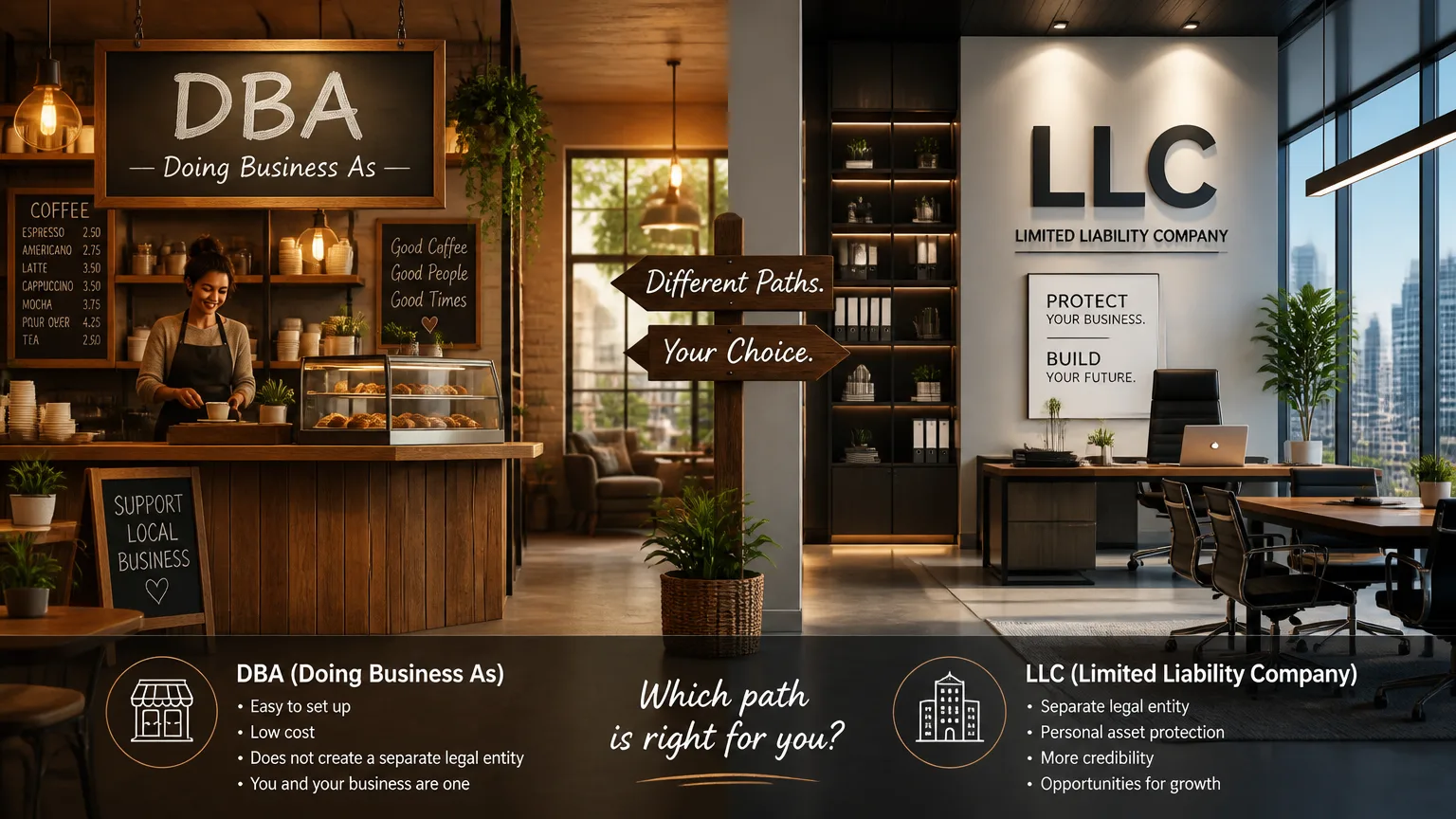
Choosing the right business structure is vital for every entrepreneur, especially when considering options like DBA vs LLC. Understanding the basics of these structures can significantly impact your legal and financial protection. A DBA, or Doing Business As, allows you to operate under a different name without forming a separate legal entity. In contrast, an LLC, or Limited Liability Company, offers personal liability protection and can enhance your credibility.
Each structure has its unique advantages that cater to different business needs. For instance, a DBA is often simpler and more affordable to set up, making it appealing for small businesses or sole proprietors. On the other hand, an LLC provides a more robust legal framework that can safeguard your personal assets from business liabilities.
In this article, we’ll explore the key differences between DBA and LLC, helping you make an informed decision for your business. By the end, you’ll have a clear understanding of which structure aligns best with your goals and needs. Whether you’re just starting out or looking to transition your business, understanding these options is the first step toward success.
What is a DBA? Understanding Doing Business As
A DBA, or “Doing Business As,” allows a business to operate under a name different from its legal name. For example, if John Smith starts a bakery called “Sweet Treats,” he would register a DBA to use that name instead of his own. This flexibility can enhance brand identity and marketing efforts, making it easier to connect with customers.
One of the main attractions of a DBA is the straightforward registration process. Typically, registering a DBA requires minimal paperwork and a small fee, making it an appealing option for small businesses and entrepreneurs who want to test new markets or products without the commitment of forming a new legal entity.
However, it’s important to note that a DBA does not provide any liability protection. This means that if your business faces legal issues or debts, your personal assets could be at risk. Unlike an LLC, which offers limited liability protection to its owners, a DBA operates solely as a name. Therefore, entrepreneurs should weigh their options carefully when considering the DBA vs LLC choice.
DBAs can also be beneficial for established businesses looking to diversify. For example, a company named “Green Landscaping” might register a DBA to operate a new service under the name “Green Cleaning.” This enables them to expand their offerings while keeping their original brand intact.
In essence, a DBA is a useful tool for branding and marketing, but it lacks the legal protections that come with an LLC. Understanding this distinction can help you make a more informed decision about the structure that best suits your business needs.
What is an LLC? Exploring Limited Liability Companies
A Limited Liability Company (LLC) is a popular business structure that blends the flexibility of a partnership with the liability protection of a corporation. This means that, as an owner, you are not personally liable for the company’s debts or legal obligations. If your LLC faces a lawsuit or incurs debt, your personal assets, like your home or savings, are generally safe.
One of the main advantages of an LLC is its operational flexibility. Unlike corporations, which have strict management and operational rules, LLCs allow owners to choose how they want to run their business. This means you can have a single-member LLC or involve multiple members, making it a versatile option for various business types.
In addition to liability protection, LLCs offer certain tax advantages. For example, LLCs can choose how they want to be taxed, either as a sole proprietorship, partnership, or corporation. This flexibility can lead to potential tax savings, depending on your business income and structure. Many entrepreneurs find that an LLC can help optimize their tax situation while providing essential legal protections.
Furthermore, forming an LLC is generally straightforward and affordable. The process usually involves filing articles of organization with your state and paying a small fee. Once established, an LLC can present a professional image to clients, which can enhance your business credibility.
In the DBA vs LLC discussion, it’s crucial to note that while a DBA offers branding opportunities, it lacks the legal protections provided by an LLC. Understanding these distinctions is essential for making informed decisions about your business structure.
DBA vs. LLC: Key Legal Differences
When deciding between a DBA (Doing Business As) and an LLC (Limited Liability Company), understanding the legal implications is crucial. The primary distinction lies in liability protection. A DBA does not provide any personal liability protection. This means that if your business incurs debt or faces a lawsuit, your personal assets could be at risk.
In contrast, an LLC offers a clear legal structure that separates your personal finances from your business liabilities. This separation means that, generally, your personal assets—like your home or savings—are protected if your business faces legal trouble. For instance, if your LLC is sued, only the assets within the LLC are at risk, not your personal belongings.
Another important difference is how these entities are taxed. A DBA is not a separate legal entity, so business income is reported on your personal tax return, which can simplify accounting. However, this also means you won’t benefit from the tax advantages that an LLC can provide. An LLC can choose how it wants to be taxed, potentially offering more flexibility and savings.
Additionally, forming an LLC typically involves more paperwork and ongoing compliance requirements compared to registering a DBA. While a DBA may only require a simple registration process, an LLC necessitates filing articles of organization and maintaining compliance with state regulations.
In summary, the DBA vs LLC decision revolves around liability protection and tax implications. If protecting your personal assets is a priority, an LLC is the better choice. If you’re looking for a simpler branding option without legal protections, a DBA may suffice. Understanding these key legal differences will empower you to make a choice that aligns with your business goals.
Tax Considerations: DBA vs. LLC
When choosing between a DBA and an LLC, understanding the tax implications is essential for your business strategy. A DBA, or “Doing Business As,” is typically taxed as personal income for sole proprietors. This means that any profits your business generates are reported on your personal tax return, which can simplify your tax filing process.
In contrast, LLCs offer more flexibility in how they are taxed. By default, a single-member LLC is also treated as a sole proprietorship for tax purposes, which means it follows similar tax rules as a DBA. However, LLCs can elect to be taxed as an S Corporation or a C Corporation. This can lead to potential tax savings, especially as your business grows.
Understanding these tax ramifications can guide your choice in business structure. For instance, if you anticipate higher earnings, an LLC might allow you to take advantage of different tax benefits. These could include the ability to deduct certain business expenses or potentially lower self-employment taxes.
Moreover, LLCs provide a layer of protection that a DBA does not. With an LLC, your personal assets are typically shielded from business liabilities. This can be an important consideration if your business faces financial challenges or legal issues.
In summary, while a DBA offers a straightforward tax structure, an LLC presents more options and protections. Evaluating these differences can empower you to make informed decisions that align with your business goals and financial strategies.
When to Choose a DBA and When to Opt for an LLC
Deciding between a DBA and an LLC depends largely on your business’s specific needs. If you’re just starting out with a low-risk business, a DBA might serve you well. It’s an affordable option that allows you to operate under a different name without the complexities of forming an LLC. For example, if you’re a freelance graphic designer, registering a DBA can help you market your services without significant upfront costs.
On the other hand, if your business has substantial assets or involves higher risks, an LLC is the more prudent choice. This structure protects your personal assets from business liabilities. For instance, if you’re launching a retail store with inventory and potential liabilities, an LLC can shield your personal finances from lawsuits or debts incurred by the business.
Cost considerations also play a crucial role in this decision. While forming an LLC generally involves higher fees and ongoing compliance requirements, a DBA is often simpler and cheaper to set up. If you’re operating on a tight budget and don’t require the legal protections of an LLC, a DBA can provide a flexible branding option.
In scenarios where you’re testing a new business idea or brand, a DBA allows for quick adaptation with minimal investment. However, if you plan on scaling your business or attracting investors, starting as an LLC may be more beneficial. This structure not only provides liability protection but also enhances credibility, which can be vital for growth.
Ultimately, weighing the risks and benefits of each option will guide you in choosing the right structure. Assess your business goals, financial situation, and the level of risk involved to make the best decision for your entrepreneurial journey.
Conclusion: Making the Right Choice for Your Business
Understanding the differences between a DBA and an LLC is crucial for any entrepreneur. A DBA allows you to operate under a business name without the formalities of incorporation. However, it does not offer the personal liability protection that an LLC provides. If safeguarding your assets is a priority, the LLC structure is the better option.
Before making your decision, evaluate your specific business needs. Consider factors such as your growth plans, financial situation, and the level of risk you’re willing to accept. For example, if you’re a freelancer or consultant seeking a professional image, a DBA might suffice. But if you plan to scale your business and protect your personal assets, an LLC is likely the way to go.
There are numerous resources available to help you navigate this decision. Consult with a legal or financial advisor to discuss your unique circumstances. Online guides and local business organizations can also provide valuable insights.
Ultimately, the choice between DBA vs LLC hinges on your business goals and risk tolerance. By understanding the implications of each structure, you empower yourself to make a confident decision that sets the foundation for your entrepreneurial success. Take the time to assess your options and choose wisely—your future business depends on it.