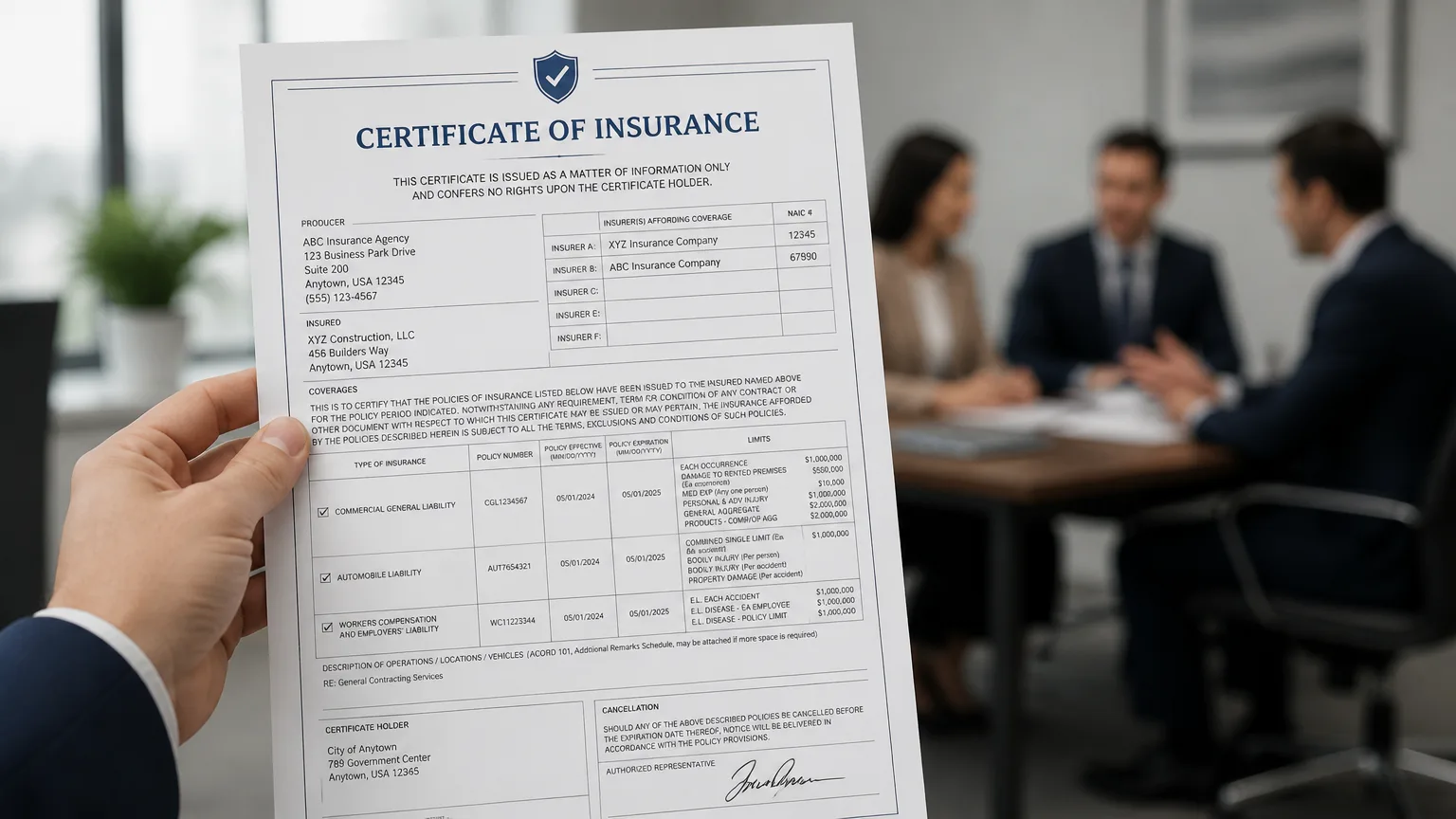
A Certificate of Insurance (COI) for business is a vital document that demonstrates your company’s insurance coverage. It serves as proof to clients, partners, and stakeholders that you have the necessary protection against potential risks. Many entrepreneurs mistakenly believe that a COI is just another formality, but in reality, it plays a crucial role in safeguarding your business operations.
Understanding COIs helps clarify their significance in risk management. If an unexpected incident occurs, having a COI can protect your business from financial setbacks and legal liabilities. For instance, if a client requires proof of insurance before signing a contract, a COI is essential to move forward confidently.
It’s important to note that not all businesses need the same type of coverage, and misconceptions about COIs can lead to inadequate protection. By prioritizing a COI for your business, you ensure that you meet industry standards and client expectations. This is especially important for entrepreneurs who are just starting and may not fully understand the legal framework surrounding their operations. For more insights on this topic, check out our article on Understanding the Legal Definition of Business.
What a Certificate of Insurance (COI) Includes
A Certificate of Insurance (COI) outlines essential details about your business’s insurance coverage. Understanding these components helps you assess risk and ensure proper protection.
First, the COI lists the types of coverage you hold. Common types include general liability, professional liability, and workers’ compensation. Each type addresses different risks. For instance, general liability protects against third-party claims, while professional liability covers errors in your services.
Next, a COI specifies policy limits. This indicates the maximum amount your insurer will pay for claims. Knowing your limits is crucial for evaluating whether your coverage is adequate. A low limit might expose your business to financial risk in the event of a significant claim.
The COI also includes effective dates. These dates show when the coverage starts and ends. It’s vital to keep this information updated, especially if you renew policies or switch providers. Gaps in coverage could leave your business vulnerable.
Another important component is the certificate holder section. This identifies who is receiving the COI, often a client or contractor. They may require this document to verify your coverage before entering into a contract.
Some COIs are straightforward, while others can be more complex. For example, a contractor may have multiple policies covering different aspects of their work. Understanding these nuances helps you communicate effectively with clients and partners.
In summary, a COI for business encapsulates critical information about your insurance coverage. Each element plays a vital role in risk assessment, ensuring you are adequately protected and compliant with industry standards.
Benefits of Having a Certificate of Insurance (COI)
A Certificate of Insurance (COI) is not just a formality; it provides essential legal protection against unforeseen events. For instance, if a client suffers property damage while you’re working on their site, your COI can shield you from legal claims. This protection can save your business from costly lawsuits and financial strain.
Having a COI also plays a crucial role in building trust with clients and partners. When you present a COI, you demonstrate that you are serious about managing risks. This assurance can be a deciding factor for potential clients looking for reliable vendors. A well-prepared COI signals professionalism, making you a more attractive choice in competitive markets.
Moreover, a COI can prevent financial loss in various scenarios. For example, if a contractor injures themselves while working on your project, your COI can cover legal fees and damages. Without this coverage, you may face significant out-of-pocket expenses, jeopardizing your business’s financial stability.
In industries where contracts are common, having a COI is often a requirement. Many clients will not engage with businesses that lack adequate insurance. By securing a COI, you not only meet these requirements but also position yourself as a trustworthy partner.
In summary, a COI for business is an indispensable tool that safeguards your enterprise against legal liabilities, enhances your credibility, and helps prevent financial setbacks. Taking the time to secure a COI can make a substantial difference in how clients and partners perceive your business.
Who Needs a Certificate of Insurance (COI)?
A Certificate of Insurance (COI) is essential for various professionals and industries. Contractors, consultants, and freelancers should prioritize obtaining a COI to demonstrate their insurance coverage. This document assures clients that they are protected against potential risks associated with their services.
In industries like healthcare, a COI is often required to prove that practitioners have the necessary liability coverage. For instance, medical professionals need to show that they can handle claims related to malpractice. Similarly, construction companies commonly present COIs to clients and regulatory agencies, ensuring compliance with safety standards and risk management.
Clients often request a COI when hiring service providers. For example, if a company is hiring a contractor to perform renovations, they may require proof of insurance to safeguard against accidents. This protects both the client and the contractor, fostering trust and transparency.
Moreover, businesses that engage in partnerships or collaborations frequently need a COI. This is particularly true in the event of joint ventures where both parties want to ensure that they are adequately covered against liabilities. Without a COI, you may miss out on vital contracts or opportunities.
Even small businesses in retail or hospitality should consider obtaining a COI. These industries often face liability risks that can arise from customer interactions or property damage. A COI helps mitigate these risks and enhances the business’s credibility.
In essence, understanding who needs a COI for business is crucial for operating within legal frameworks and meeting client expectations. It not only protects your business but also reassures clients that you are serious about risk management.
How to Obtain a Certificate of Insurance (COI)
Getting a Certificate of Insurance (COI) for your business is a straightforward process, but it requires careful planning. Start by finding a reliable insurance provider. Research companies that specialize in business insurance. Look for providers with good reviews and a solid reputation.
Once you’ve identified potential providers, reach out to them. Prepare a list of key questions to ask during your conversations. Inquire about their experience with your industry, the types of coverage they offer, and any specific requirements for obtaining a COI. It’s also essential to ask about the claims process, so you know how support works if needed.
Evaluating different coverage options is crucial. Compare policies to see which ones fit your business’s needs. Look for essential elements like general liability, professional liability, and any industry-specific coverage. Understanding the limits and exclusions of each policy will help you make informed decisions.
Make sure to provide accurate information about your business to your insurance provider. This ensures you receive the appropriate coverage and a correct COI. If you have employees or specific risks associated with your services, discuss these aspects in detail.
After you select a policy, your provider will issue the COI. Ensure that it includes all required details, such as coverage types and limits. This document is not just for your records; it’s often requested by clients or partners.
For those starting their entrepreneurial journey, mastering the basics of business formation can be beneficial. Consider reading “Mastering Your Ohio LLC Search: A Step-by-Step Guide” to get a clearer understanding of the legal aspects involved in business ownership.
Final Thoughts on the Importance of a Certificate of Insurance (COI)
Securing a Certificate of Insurance (COI) is vital for your business’s security and credibility. It demonstrates your commitment to risk management, reassuring clients and partners that you take their concerns seriously.
Obtaining a COI is a proactive step that can protect you from potential legal liabilities and financial setbacks. By taking this simple action, you set your business up for long-term success.
As you navigate the complexities of business ownership, consider how a COI fits into your overall strategy. For more insights on the legal aspects of business, check out our article on Navigating the Legal Environment of Business. Empower yourself today to ensure a brighter future for your enterprise.