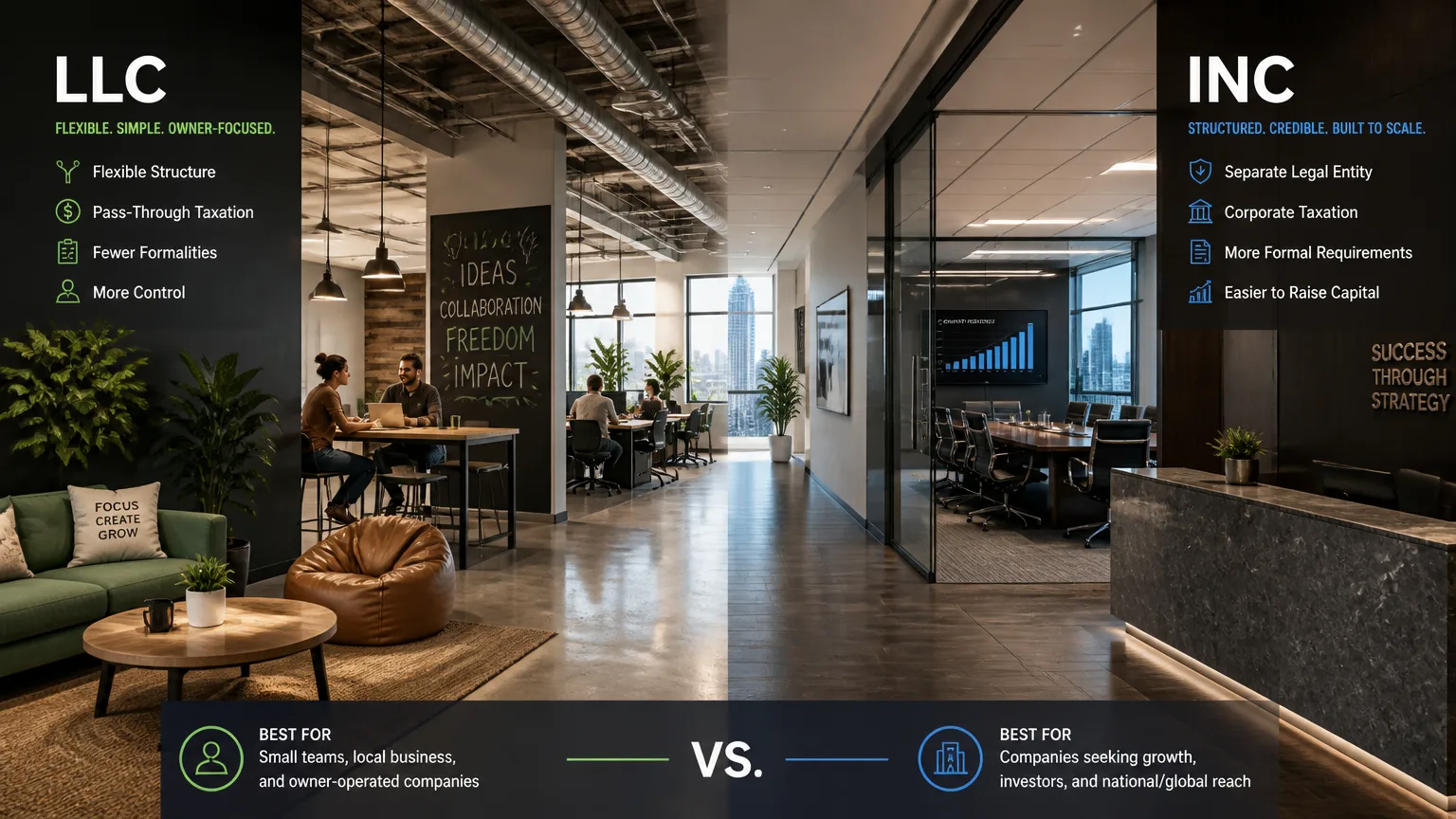
Choosing the right business structure is a crucial step in setting up your venture for success. The structure you select affects everything from your personal liability to tax obligations. Among the most popular options for entrepreneurs are Limited Liability Companies (LLCs) and Corporations (Inc). Each offers unique advantages and disadvantages that can impact your business in various ways.
Understanding the difference between LLC and Inc is essential for making an informed decision. An LLC provides flexibility and protection while allowing for simpler management. On the other hand, an Inc offers a more formal structure with potential for growth and investment opportunities.
This article aims to clarify the differences between these two business structures, helping you determine which is the best fit for your goals. By breaking down key aspects like liability, taxation, and operational requirements, we’ll empower you to take the next step with confidence. Whether you’re just starting out or looking to transition your existing business, understanding these distinctions will guide you toward making the right choice.
What is an LLC?
A Limited Liability Company (LLC) is a flexible business structure that combines the benefits of a corporation and a partnership. Owned by members, an LLC allows for multiple owners who share in the management and profits. This member-based ownership helps in creating a collaborative environment.
One of the primary advantages of an LLC is the liability protection it offers. Members are generally not personally liable for the company’s debts and obligations. This means that personal assets, like your home or savings, are typically protected if the business faces legal issues or financial troubles.
Another key benefit of an LLC is its tax flexibility. LLCs can choose how they want to be taxed—either as a sole proprietorship, partnership, or corporation. This allows members to optimize their tax situation based on their unique circumstances.
With these features, an LLC is an appealing option for many entrepreneurs, especially those seeking a balance between simplicity and protection. Understanding the difference between LLC and Inc can help you determine if this structure fits your business goals.
What is an Inc (Corporation)?
A corporation, often referred to as an “Inc,” is a formal business structure that operates independently from its owners. It consists of shareholders who own the company and a board of directors responsible for making major decisions. This structure provides a clear hierarchy, which can streamline operations and decision-making.
One of the key benefits of a corporation is personal liability protection for its shareholders. This means that if the corporation faces legal action or debts, the personal assets of shareholders are generally shielded. This protection can offer peace of mind, especially for those concerned about potential risks.
Corporations also have a distinct advantage when it comes to raising capital. They can attract investors more easily since shares can be sold to the public or private entities. This ability to generate funding can fuel growth and expansion, making corporations an appealing choice for businesses with ambitious goals.
In summary, understanding the characteristics and benefits of an Inc can help you weigh the difference between LLC and Inc, guiding you toward the right business structure for your needs.
Key Differences Between LLC and Inc
When choosing between an LLC and a corporation (Inc), it’s essential to understand their key differences. Ownership is one significant factor. An LLC allows for flexible ownership structures, accommodating individuals, corporations, and even other LLCs. In contrast, corporations issue shares, making ownership more formal and usually requiring a board of directors.
Management styles also differ. LLCs often employ a more straightforward management approach, allowing members to manage the business directly. Corporations, however, have a defined hierarchy, with shareholders electing a board to oversee operations. This structure can lead to more complexity but may be beneficial for larger enterprises.
Tax implications are another critical distinction. LLCs typically enjoy pass-through taxation, meaning profits go directly to members without facing corporate tax. Corporations face double taxation, where profits are taxed at the corporate level and again when distributed as dividends. This can significantly affect your bottom line.
Regulatory requirements vary as well. LLCs generally have fewer compliance obligations, such as simpler annual reports and less stringent record-keeping. Corporations, on the other hand, must adhere to more rigorous regulations, including regular meetings and detailed minutes. Understanding these differences can help you navigate the complexities and choose the right structure for your business.
Choosing the Right Structure for Your Business
Determining the right business structure is a crucial step in your entrepreneurial journey. Start by assessing your business goals. Are you aiming for rapid growth, or do you prefer a more stable, manageable approach? Understanding your vision will help clarify whether an LLC or Inc aligns with your aspirations.
Next, consider your funding needs. If you plan to seek outside investors, a corporation might be more appealing due to its ability to issue stock. Conversely, an LLC can be an affordable option for those who want to keep things simple.
Lastly, evaluate your risk tolerance. An LLC generally offers more personal liability protection, which can be comforting for new entrepreneurs. However, corporations also provide robust safeguards.
For personalized advice tailored to your situation, consulting with a legal or financial advisor is always a smart move. Remember, your choice will impact liability, taxes, and growth potential.
Making an Informed Decision
Choosing between an LLC and an Inc is crucial for your business’s future. An LLC offers flexibility and simpler management, making it ideal for many small businesses. However, it may not attract as much investment as a corporation. On the other hand, an Inc can provide greater credibility and access to funding, but it comes with more regulations and complexity.
Align your choice with your personal and business goals. Consider factors like growth potential, liability protection, and tax implications. By understanding the difference between LLC and Inc, you can make a confident decision that supports your entrepreneurial journey.
Now that you have the knowledge, take action. Evaluate your options and choose the structure that best fits your vision. Your business deserves the right foundation for success!