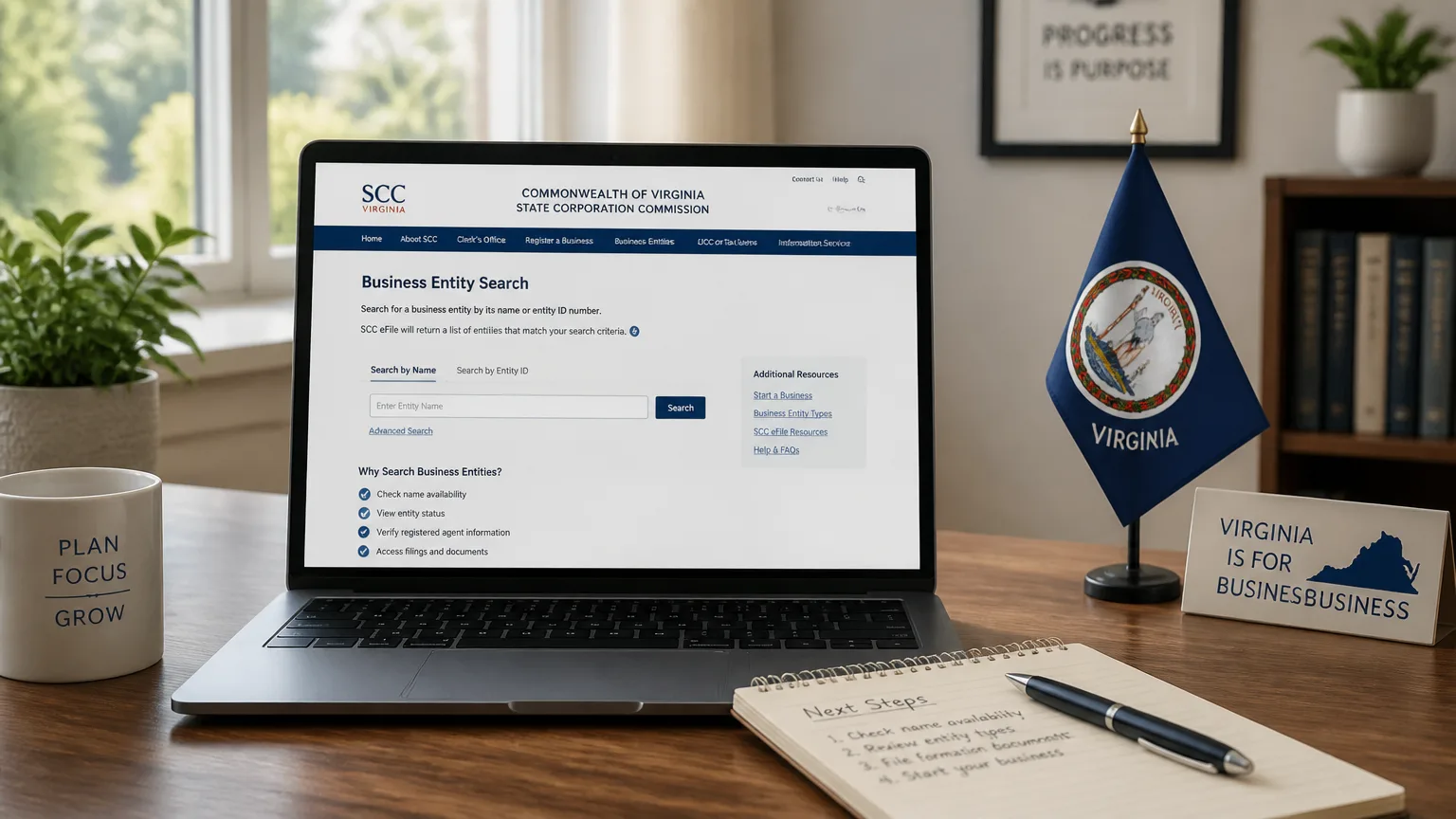
When starting a business in Virginia, conducting a Virginia business entity search is a crucial first step. This process allows you to ensure that your desired business name is available and not already in use. It’s essential for avoiding potential legal issues and ensuring your branding is unique.
The Virginia State Corporation Commission (SCC) plays a key role in this process. They maintain a comprehensive database of all registered business entities in the state. By utilizing their resources, you can quickly check if your chosen business name is available, saving you time and resources down the road.
Failing to perform this search can lead to unnecessary complications, such as conflicts with existing businesses. By taking this proactive step, you set a strong foundation for your LLC or other business entities. In the following sections, we’ll guide you through how to conduct a Virginia business entity search effectively, ensuring you feel confident in your next steps toward entrepreneurship.
1. Understanding Business Entities in Virginia
When starting a business in Virginia, it’s crucial to understand the different types of business entities available. The most common options include Limited Liability Companies (LLCs), corporations, and partnerships. Each has unique characteristics, advantages, and implications for your business.
An LLC is often favored for its flexibility and simplicity. It protects personal assets from business liabilities, meaning your personal finances remain separate from your business obligations. This structure offers the benefits of pass-through taxation, where profits are taxed at the owners’ personal tax rates, avoiding double taxation that corporations face.
Corporations, while providing liability protection, come with more formalities and regulatory requirements. They are ideal for businesses seeking to raise capital through stock sales but may not be the best fit for small startups. Partnerships, on the other hand, allow for shared management and resources but expose partners to personal liability for business debts.
Choosing the right business structure is essential for long-term success. It affects everything from taxation to personal liability and management style. For many entrepreneurs in Virginia, forming an LLC is a popular choice due to its balance of simplicity and protection.
Common reasons to form an LLC in Virginia include the desire for personal asset protection, ease of management, and favorable tax treatment. Understanding these distinctions will help you make informed decisions during your Virginia business entity search, setting you up for success as you embark on your entrepreneurial journey.
2. The Importance of Conducting a Business Entity Search
Conducting a Virginia business entity search is a crucial step in your entrepreneurial journey. This search helps ensure that your desired business name is available and not already in use. A unique name is essential for branding purposes; it distinguishes your business in a crowded marketplace and helps establish your identity.
Failing to perform this search can lead to serious consequences. For instance, if you choose a name that is already trademarked, you could face legal issues down the line. This might involve costly rebranding or even lawsuits. By checking for existing entities, you can avoid these potential conflicts and safeguard your business’s reputation.
Additionally, a thorough search can reveal if other businesses are operating under similar names. This knowledge allows you to make informed decisions about your branding strategy. A distinct name not only fosters customer recognition but also builds trust with your audience.
Moreover, conducting a Virginia business entity search contributes to your overall business strategy. It reflects your commitment to professionalism and due diligence, which can positively impact your relationships with customers, partners, and investors. By taking this proactive step, you position yourself for success from the very beginning.
3. Step-by-Step Guide to Performing a Virginia Business Entity Search
Conducting a Virginia business entity search is straightforward when you know where to look. Here’s a step-by-step guide to help you navigate the Virginia State Corporation Commission (SCC) website with ease.
Step 1: Access the SCC Website
Start by visiting the Virginia SCC website at scc.virginia.gov. Once there, look for the “Business” tab in the main menu. This section contains all the resources you need for your search.
Step 2: Locate the Business Entity Search Tool
Under the “Business” tab, find the link titled “Entity Search.” Click on this link, and you’ll arrive at the search tool that allows you to explore existing business entities in Virginia.
Step 3: Input Your Search Criteria
You can search by business name, entity ID, or registered agent. For the best results, enter the full business name if you have it. If not, try partial names or keywords. Be sure to select the appropriate search type from the dropdown menu to refine your results.
Step 4: Review the Search Results
After entering your criteria, click the “Search” button. The results will display a list of businesses that match your input. Each entry provides essential details, including the entity name, status, and registration date.
Step 5: Interpret the Information
Click on a specific business name to view more detailed information. This includes the business’s status (active or inactive), its principal office address, and the names of its officers. Pay attention to the status to ensure there are no conflicts with your intended business name.
By following these steps, you can efficiently conduct a Virginia business entity search. This process not only informs you about existing businesses but also helps you make confident decisions moving forward.
4. Common Challenges and How to Overcome Them
Conducting a Virginia business entity search can present several challenges. One common issue is understanding database limitations and potential errors. State databases may not always be up-to-date, leading to discrepancies in business status. To overcome this, always cross-reference your findings with official state resources or consult the Virginia Secretary of State’s website for the most accurate information.
Another challenge arises when dealing with similar business names. If your desired name closely resembles another, it can lead to confusion or rejection. To navigate this, consider variations of your business name or add a descriptive term. For instance, if “Smith Consulting” is taken, think about “Smith Consulting Solutions.” This approach not only keeps your brand unique but also enhances clarity for your potential customers.
Sometimes, the search process can feel overwhelming, especially for first-time entrepreneurs. If you find yourself stuck, don’t hesitate to seek assistance. Local business development centers or legal professionals are valuable resources. They can guide you through the nuances of the Virginia business entity search and help you make informed decisions.
By proactively addressing these challenges, you can streamline your search process. Remember, every obstacle is an opportunity to refine your business strategy and ensure you’re on the right path. Stay persistent, and you’ll find the information you need to move forward confidently.
5. Best Practices After Completing Your Search
Now that you’ve completed your Virginia business entity search, it’s time to take the next important steps to secure your business name and establish your entity. First, consider reserving your chosen business name. In Virginia, you can file a name reservation application online or via mail. This step ensures that no one else can claim the name while you finalize your plans.
Once your name is secured, focus on filing for your LLC. You can complete this process online through the Virginia State Corporation Commission’s website. Fill out the Articles of Organization form and submit it along with the required filing fee. Ensure all information is accurate to avoid delays.
After filing, staying compliant with Virginia business regulations is crucial. This includes understanding your tax obligations and any necessary permits or licenses for your industry. Regularly review state requirements to keep your business in good standing.
Additionally, consider setting reminders for important deadlines, such as annual reports and renewals. This proactive approach will help you avoid penalties and maintain your business’s credibility.
By following these best practices, you can confidently move forward with your venture, knowing you’ve laid a solid foundation for your business in Virginia.
Conclusion: The Importance of Being Prepared
Conducting a thorough Virginia business entity search is a vital step in your entrepreneurial journey. By checking existing business names and statuses, you can avoid potential legal conflicts and position your venture for success. A comprehensive search not only boosts your confidence but also demonstrates professionalism to customers and partners.
Utilizing local resources can further simplify your business setup. From state websites to local business organizations, these tools can provide valuable insights and support. Don’t hesitate to reach out and leverage these resources as you navigate the process.
In conclusion, being prepared sets the tone for your business in Virginia. Embrace this opportunity to lay a strong foundation, and remember that every step you take brings you closer to realizing your entrepreneurial dreams. Your journey begins with a confident, informed decision—so take action today!