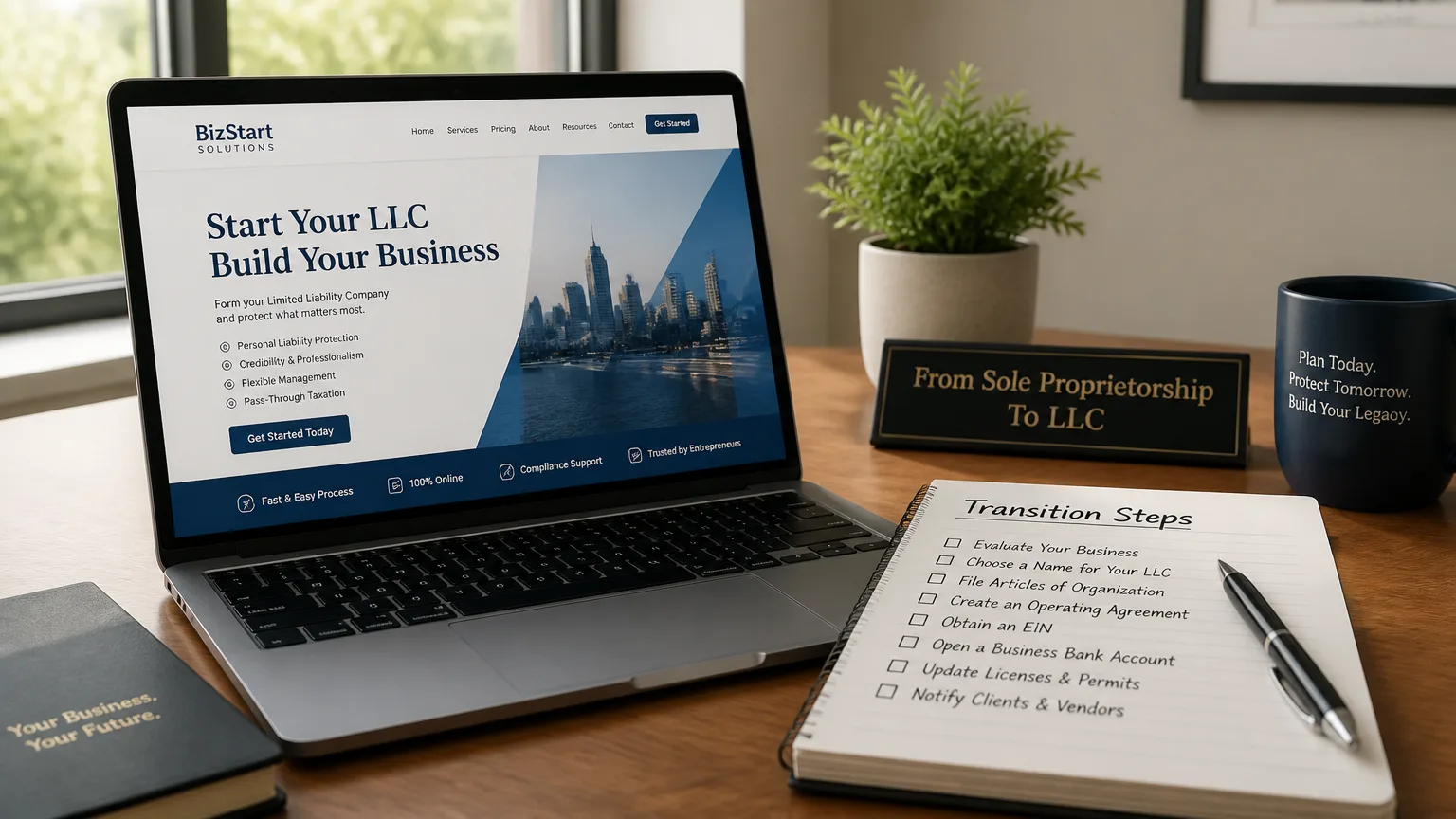
Transitioning from a sole proprietorship to an LLC is a significant step for many entrepreneurs. This change from sole proprietorship to LLC not only provides enhanced credibility but also personal liability protection. As your business grows, the need for a more formal structure becomes crucial.
LLCs, or limited liability companies, have surged in popularity due to their flexible management and tax benefits. Unlike sole proprietorships, LLCs separate your personal and business assets, meaning your personal finances are protected from business debts and legal claims. This peace of mind is a game-changer for many business owners.
Understanding the process of this transition is vital to ensure a smooth and successful change. While the steps may seem daunting, they are straightforward when broken down. This guide will walk you through each part of the process, empowering you to make this important shift confidently. By the end, you’ll know exactly what it takes to transform your business structure and protect your future.
Step 1: Evaluate Your Business Goals
Before you change from sole proprietorship to LLC, take time to clarify your business goals. Understanding your motivations will guide your decisions throughout this transition.
Consider your future growth plans. An LLC can provide more flexibility and credibility as your business expands. This structure may attract investors or partners who prefer a more formal organization.
Reflect on the potential tax implications. An LLC can offer different tax benefits compared to a sole proprietorship, depending on your situation. Consulting a tax professional can help you understand how this change might impact your finances.
Don’t overlook personal liability concerns. Transitioning to an LLC can protect your personal assets from business debts and lawsuits. This added security is crucial for entrepreneurs looking to minimize risk.
Having a clear vision for your business will empower you during this process. Knowing your goals ensures that the change aligns with your long-term aspirations.
Step 2: Research Your State’s LLC Requirements
Understanding your state’s LLC requirements is crucial when you change from sole proprietorship to LLC. Each state has its own regulations, so thorough research is essential to ensure compliance.
Start by checking the naming conventions for LLCs in your state. Most states require that your business name includes “LLC” or “Limited Liability Company.” Next, you’ll need to designate a registered agent. This person or entity will receive legal documents on behalf of your LLC.
Additionally, gather the necessary filing documents. Typically, you’ll need to file Articles of Organization with your state’s Secretary of State. This document outlines basic information about your LLC, including its name and address.
If you’re considering Wyoming, performing a wyoming business entity search is a wise move. This search helps ensure your desired business name is available and complies with local regulations.
Staying compliant with state requirements is vital to avoid legal issues down the road. Making informed decisions now sets a strong foundation for your business’s future.
Step 3: Choose a Business Name for Your LLC
Choosing a business name is a pivotal step when you change from sole proprietorship to LLC. Your name should be unique and comply with your state’s naming regulations. This means it can’t be too similar to existing businesses and must include “LLC” or “Limited Liability Company.”
Common naming conventions for LLCs often incorporate terms that reflect the nature of the business. For example, if you run a bakery, names like “Sweet Treats LLC” or “Delicious Bakes Limited Liability Company” could work well.
Before settling on a name, check its availability. Most states offer online databases where you can search for existing business names. This step is crucial to avoid potential legal disputes later.
A well-chosen name not only meets legal requirements but also resonates with your target audience, making a memorable impression. Take your time to find a name that truly represents your brand.
Step 4: File Your Articles of Organization
Filing your Articles of Organization is a crucial legal step in officially forming your LLC. This document typically includes essential information like your business name, address, and the names of the members or managers. You’ll also need to indicate whether your LLC will be member-managed or manager-managed.
The filing process varies by state, but it generally involves submitting your Articles to the appropriate state agency, often the Secretary of State. Be prepared to pay a filing fee, which can range from $50 to $500, depending on your state. Check your state’s specific requirements to ensure you have all necessary information and documents ready.
Some states may have unique nuances, such as additional forms or publication requirements. For instance, a few states require you to publish a notice of your LLC formation in a local newspaper. Familiarizing yourself with these details will help you avoid any delays or complications in the transition from sole proprietorship to LLC.
Step 5: Create an Operating Agreement
An operating agreement is a crucial document that outlines the ownership and operational procedures of your LLC. While not always required by law, having one can significantly protect you and your business in the long run. This agreement acts as a roadmap for how your LLC will function, ensuring clarity and reducing potential conflicts among members.
Typically, an operating agreement covers several key areas. It details member roles, responsibilities, and how profits will be distributed. By clearly defining these elements, you set expectations and prevent misunderstandings among members.
Even if you’re the sole member of your LLC, having an operating agreement is still beneficial. It reinforces your limited liability status and can help separate your personal assets from your business. In the event of disputes or legal challenges, this document can serve as important evidence of your business structure and intentions.
Step 6: Obtain Required Licenses and Permits
Depending on your business type, you may need various licenses and permits to operate legally as an LLC. These requirements can vary widely based on your industry and location. For example, if you run a restaurant, you’ll need health permits and food service licenses. A construction business typically requires specific contractor licenses.
Compliance with local, state, and federal regulations is crucial. Each jurisdiction has its own set of rules, which can include zoning permits, professional licenses, and even sales tax permits. Make sure to check both state and local regulations to ensure you’re fully compliant.
Overlooking this step can lead to delays and potential fines. If you start operating without the necessary licenses, you risk facing legal consequences that could hinder your business growth. Take the time to research and secure all required permits before moving forward with your LLC. This proactive approach will set a strong foundation for your business and keep you on the right side of the law.
Final Thoughts on Transitioning to an LLC
Transitioning from a sole proprietorship to an LLC is a significant step that brings numerous advantages, including enhanced liability protection. This transition not only safeguards your personal assets but also positions your business for growth and credibility.
However, it’s important to remember that forming an LLC comes with ongoing responsibilities, such as annual filings and compliance with state regulations. Staying organized and proactive will help you manage these requirements and maintain your LLC’s good standing.
As you embark on this journey, don’t hesitate to seek professional advice if you have questions or concerns. Legal and financial experts can provide tailored guidance to ensure a smooth transition.
Finally, if you’re curious about business abbreviations related to LLCs and other structures, check out Understanding the Short Form of Enterprises: Common Abbreviations Explained. This resource will deepen your understanding and help you navigate the complexities of business terminology.
Embrace this change confidently; the benefits of an LLC can significantly enhance your entrepreneurial journey.