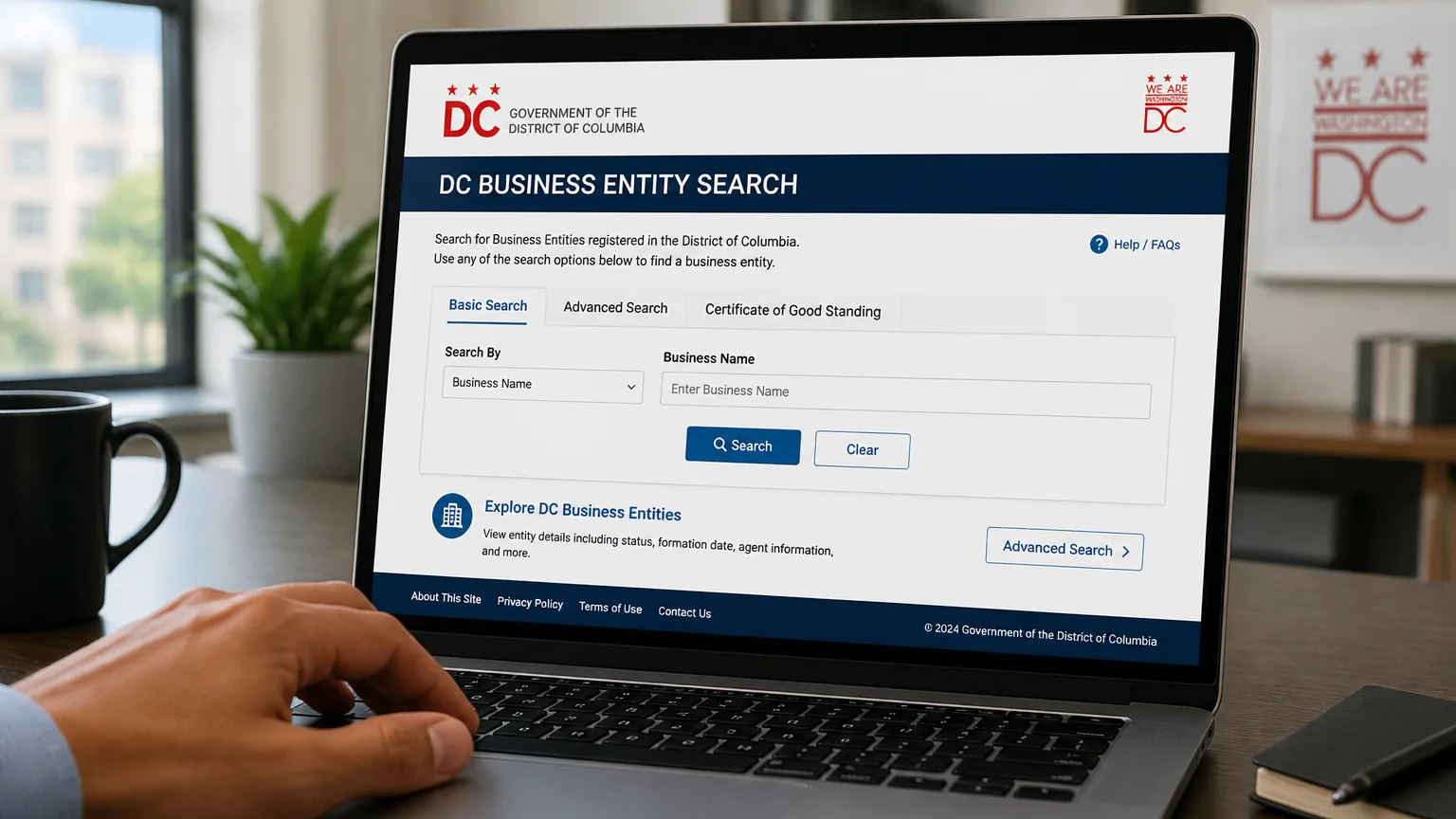
Understanding the DC Business Entity Search tool is essential for any entrepreneur looking to establish a business in Washington, D.C. This powerful resource allows you to access vital business records, ensuring that you’re informed and compliant during the LLC formation process. By utilizing this tool, you can verify existing business names, check registration statuses, and understand the structure of potential competitors.
The importance of knowing business records cannot be overstated. They empower you to make informed decisions and avoid potential legal complications. For instance, if you’re considering a name for your LLC, the DC Business Entity Search can help you confirm its availability, saving you time and effort down the road.
In this article, you can expect to learn step-by-step how to navigate the DC Business Entity Search tool effectively. We’ll cover its key features, provide practical tips for using it, and demonstrate how it can aid in your compliance efforts. Additionally, we’ll explore related resources, such as Understanding the Register of Directors: Key Insights for Entrepreneurs, to further enhance your business knowledge. Get ready to take the first step toward building your enterprise with confidence!
1. Accessing the DC Business Entity Search Tool
To get started with the DC Business Entity Search, open your web browser and enter the keyword “DC Business Entity Search” into your preferred search engine. The official site typically appears at the top of the search results. Clicking on the link will direct you to the tool’s homepage, where you can begin your search.
Upon accessing the tool, you’ll notice a user-friendly interface. The main search bar is prominently displayed, allowing you to enter the name or registration number of the business you’re looking for. Take a moment to explore the various features available. You can filter results by status, type of entity, and more, which makes it easier to narrow down your search.
If you encounter any issues accessing the site, there are some simple troubleshooting steps to try. First, check your internet connection to ensure you’re online. If the page doesn’t load, refreshing the browser can often resolve temporary glitches. Additionally, clearing your browser’s cache can help if you’re facing persistent loading problems.
Sometimes, the search might not yield results. This could mean that the business is not registered or that you entered the name incorrectly. Double-check the spelling and try variations of the name. Using keywords such as “LLC” or “Inc.” can also refine your search.
By following these steps, you’ll be well on your way to utilizing the DC Business Entity Search Tool effectively. This resource is invaluable for ensuring compliance and gaining insights into existing businesses in the District of Columbia.
2. Understanding the Various Search Options
The DC Business Entity Search Tool offers several search criteria to help you find the information you need efficiently. By understanding these options, you can tailor your search to get the most relevant results.
First, searching by business name is the most common method. Entering the full name of the business can yield exact matches. If you’re unsure of the exact name, try using partial names or keywords. This is especially useful when investigating competitors or verifying a business’s existence.
Next, you can refine your search by entity type. The tool allows you to filter results based on whether the business is an LLC, Corporation, or Partnership. This is crucial for entrepreneurs who want to understand the structure of businesses in their field. For example, if you’re starting an LLC, knowing the landscape of similar entities can help you position your business effectively.
Another critical option is searching by status. The tool lets you check if a business is active, inactive, or dissolved. This feature is essential for ensuring you’re not infringing on an existing entity or understanding the market dynamics of your competitors. An inactive status could signal an opportunity to acquire a business name or learn from past failures.
For more advanced searches, utilize the search filters available. You can combine criteria, such as entity type and status, to narrow down your results further. This is particularly helpful if you’re researching a specific sector or need detailed insights for compliance purposes.
Remember to keep your searches specific but flexible. If your initial search yields too many results, consider adjusting your parameters. The DC Business Entity Search Tool is designed to make your inquiries straightforward, so take advantage of these features to get the information you need with confidence.
3. Analyzing Search Results
Once you’ve conducted your search using the DC Business Entity Search Tool, it’s time to analyze the results. Each entry provides key information essential for understanding the status of a business.
Look for the registration date, which tells you when the business was officially formed. A more recent registration might indicate a new entrant to the market, while an older registration could suggest stability. Next, check the status of the entity. It can be active, inactive, or even dissolved. An inactive status may signal potential issues, such as failure to comply with local regulations.
Another critical field is the directors or officers section. This area shows the individuals who manage the business. If a company has numerous changes in directors, it might indicate instability or internal issues. For example, a newly formed LLC with frequent leadership changes might not be the best partner for your business endeavors.
Pay attention to potential red flags in the results. For instance, if the status shows “dissolved,” this means the company is no longer recognized as a legal entity. This could impact any business dealings or partnerships you may consider. Additionally, if there are discrepancies between the registration date and the status, it may warrant further investigation.
To deepen your understanding of what constitutes a small business, you can explore resources like Understanding the Definition of Small Business: Key Characteristics Explained. This knowledge will help you assess whether the entities you’re reviewing align with your business goals and values.
By carefully interpreting these results, you can make informed decisions as you navigate the landscape of the DC business community.
4. Keeping Your Business Information Updated
Once your business is registered, maintaining accurate information is crucial. The DC Business Entity Search Tool allows you to easily update your records. Regular updates ensure that your business complies with local regulations and enhances your credibility in the marketplace.
To update your business details, start by visiting the DC Business Entity Search Tool. Enter your business name or entity number to access your profile. Once you have the correct record, look for the option to edit or update your information. This may include changes to your address, officers, or registered agent. Completing these updates is typically a straightforward process.
Timely updates are essential for compliance. If your information is outdated, you may face penalties or fines. Additionally, inaccurate records can lead to legal issues or hinder your ability to secure funding. Investors and partners often check business records for reliability; outdated information can damage your reputation.
Failing to keep your business records current can have serious implications. For instance, if you change your business address and do not update it, important notifications might not reach you. This could result in missed deadlines or legal notices that could affect your operations.
Regularly reviewing your business information also shows that you are proactive and organized. It instills confidence in clients, investors, and regulatory bodies. Make it a habit to check your details at least once a year, or whenever a significant change occurs.
By effectively using the DC Business Entity Search Tool to keep your records updated, you not only comply with legal requirements but also build a trustworthy foundation for your business.
5. Utilizing Additional Resources
To maximize the benefits of the DC Business Entity Search Tool, consider exploring additional resources that can deepen your understanding and enhance your business management skills. The landscape of business can be complex, and having the right support is crucial.
One valuable resource is your local state business website. These platforms often provide guidelines on compliance, registration, and entity structure. Familiarizing yourself with these offerings can simplify your journey as an entrepreneur.
Additionally, seeking legal advice can be instrumental in navigating the intricacies of business law. Engaging with a qualified attorney can help clarify any questions you may have about entity formation or compliance requirements. This professional guidance ensures you’re making informed decisions for your business.
External guides on business entity management can also serve as excellent references. For instance, articles like Understanding Small Medium Enterprises: A Comprehensive Overview for Entrepreneurs break down essential concepts, helping you grasp the nuances of different business structures.
Participating in entrepreneurship communities can provide invaluable support. These networks allow you to connect with fellow entrepreneurs who share experiences and insights. By engaging in discussions, you can discover tips and strategies that can enhance your understanding of using the DC Business Entity Search Tool effectively.
By leveraging these resources, you not only empower yourself but also build a robust foundation for your business. The more informed you are, the better equipped you’ll be to navigate your entrepreneurial journey with confidence.
Conclusion: Empowering Your Business Journey
In conclusion, the DC Business Entity Search Tool is an essential resource for any entrepreneur looking to establish or manage a business in the District of Columbia. By understanding how to access and interpret the data, you can ensure compliance and make informed decisions about your business strategy.
Utilizing this tool not only helps you stay updated on your own business status but also keeps you informed about your competitors. Remember, knowledge is power in the business world. Regularly checking your entity’s details can help you maintain a trustworthy presence in the market.
We encourage you to take action today. Start using the DC Business Entity Search Tool to gain insights and ensure your business remains compliant. For further learning, check out the Essential Guide to the National Business Services Letter to deepen your understanding of related topics. Your entrepreneurial journey is just beginning—embrace the tools available to you!